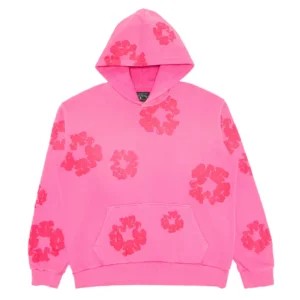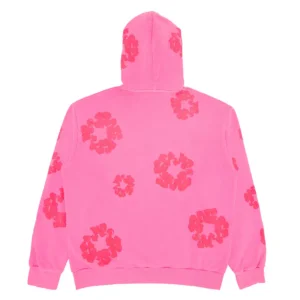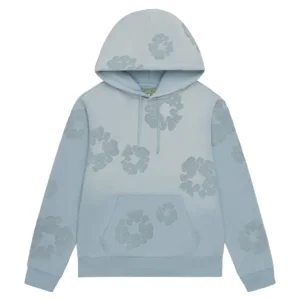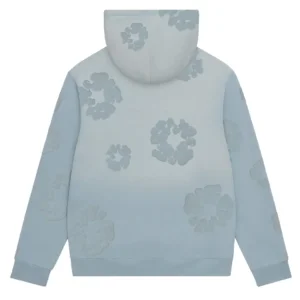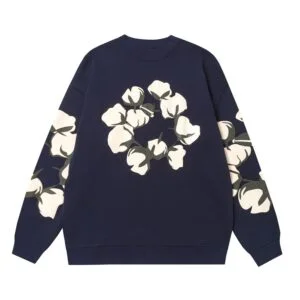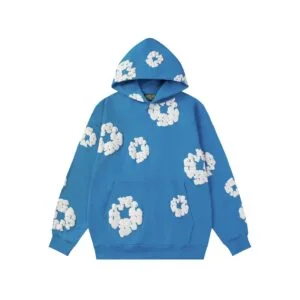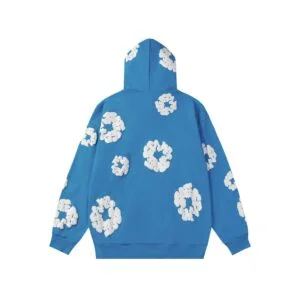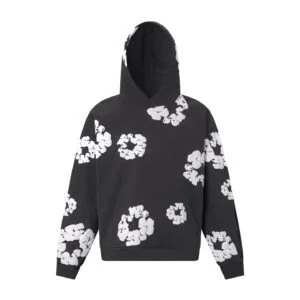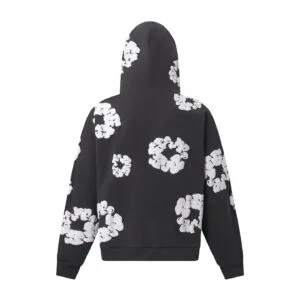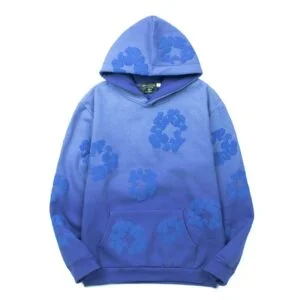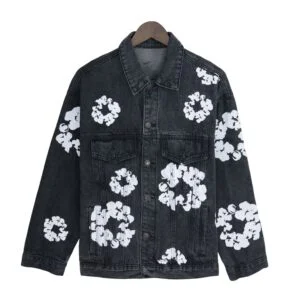

Wash Denim Tears inside out, on cold, on a gentle cycle, with liquid detergent and no fabric softener, then air dry it. The part that matters most is the last one. The cotton wreath on the hoodies, sweatpants and sweatshorts is a puff print, and puff prints are raised by heat in the first place, so putting one back through a hot dryer works against the thing that made it. Cracking is usually a heat problem rather than a detergent problem.
Why the Dryer Does More Damage Than the Wash
Puff printing works by mixing a heat-activated additive into the ink. When the garment is cured, that additive expands and lifts the ink off the fabric, which is where the raised texture you can feel comes from. Heat created the effect, and more heat afterwards is what flattens and cracks it.
That single fact reorders the usual advice. People blame detergent when a print starts to crack, but on a puff print the tumble dryer is the faster route to damage. A garment washed slightly wrong and hung to dry will generally outlast one washed perfectly and tumbled hot.
It applies to the whole cotton wreath fleece range. The product pages describe the hoodie, the sweatpants and the sweatshorts as carrying puff print wreaths on the front and back, so one routine covers all three.
The Routine, Step by Step
Turn the garment inside out before it goes in. This keeps the raised print off the drum and away from friction with everything else in the load, which is the second most common cause of wear after heat.
Wash cold on a gentle or delicate cycle. Use a liquid detergent rather than powder, since undissolved powder is abrasive against a raised print. Skip fabric softener entirely, and skip bleach and anything with optical brighteners.
Watch what shares the load. Zips, buttons, denim and towels all abrade a puff print, so wash fleece with fleece and similar colors. Use the lowest spin your machine offers, then take the piece out promptly rather than leaving it compressed and damp in the drum.
Dry flat or on a rack, away from direct sunlight and away from a radiator. Sun fades the print and concentrated heat behaves like a dryer. Hanging a heavy wet hoodie on a narrow hanger also stretches the shoulders, so lay it flat if you can.
Ironing and Steaming
Never put an iron directly on the wreath. Direct heat on a puff print does exactly what a hot dryer does, only faster and in one spot.
If a piece genuinely needs pressing, turn it inside out, use the lowest heat setting and keep the iron off the printed area, or lay a cloth over it. A steamer held at a distance is the safer option for creases, since it relaxes the fabric without pressing anything into the print.
The Denim Follows Different Rules
The cotton wreath denim isn’t the same problem. It’s 14oz Japanese selvedge, cut, sewn and washed in the USA, with an all-over print rather than a raised one, so it fades with the fabric instead of sitting on top of it.
Selvedge denim rewards being washed rarely. Wear it, air it out between wears, and wash only when it actually needs it rather than on a schedule, which is how the creasing and fading develop around how you move. When you do wash it, turn it inside out, use cold water and hang it to dry. Darker washes release indigo in the first few cycles, so keep them away from light-colored laundry until the water runs clear.
The dryer is off the table here too, for a different reason. These are 100% cotton with no elastane, so heat shrinks them, and a shrunk selvedge jean doesn’t come back.
Shrinkage, and Why It Costs More Here
Every cotton wreath piece we checked is 100% cotton with nothing synthetic in the blend, which means heat will shrink all of it. What makes that expensive with this brand specifically is where the fit is already tight.
The hoodie’s published body length is 29 inches at both XL and XXL, so length is the dimension the brand stops giving you at the top of the range. The sweatpants have a 30 inch inseam at every size from XS to XXL. Both are short measurements to begin with, and a hot wash takes from exactly the dimension you can’t get back by sizing up. Our sizing guide has the full measurement tables.
There’s also no real safety net. Cotton wreath styles are marked final sale on the brand’s own site, so a piece you shrink isn’t a piece you exchange.
The Brand Does Not Publish Care Instructions Online
Worth knowing before you go looking. The product pages on denimtears.com list composition, country of manufacture, fit and the final sale notice, but no washing instructions. The care information lives on the wash tag stitched into the side seam.
That’s the same tag worth photographing for a completely different reason, since its print quality is one of the checks that separates a genuine piece from a rep. If you’re buying secondhand and the tag has been cut out, you lose both the care instruction and one of the better authentication signals, so treat a missing wash tag as a reason to ask more questions and to default to the most conservative routine above.
FAQ
Can you put Denim Tears in the dryer?
Better not to. The cotton wreath on the fleece pieces is a puff print raised by heat during curing, so dryer heat can flatten or crack it, and the garments are 100% cotton with no elastane, so they shrink. Air drying flat or on a rack avoids both problems at once.
Why is my Denim Tears print cracking?
Most often heat rather than washing. Tumble drying, ironing directly onto the wreath or drying on a radiator all work against a raised print. Friction is the second cause, which is why washing inside out and keeping zips and denim out of the same load matters.
Does Denim Tears shrink?
It can, since the pieces are 100% cotton without synthetic content. Cold washing and air drying keep it minimal. It’s worth taking seriously here because the hoodie stops gaining length after XL and the sweatpants have a fixed 30 inch inseam, so shrinkage hits the dimensions a larger size won’t replace.
Can you iron a Denim Tears hoodie?
Only with care and never on the print. Turn it inside out, use the lowest heat, keep the plate off the wreath or lay a cloth over it. A steamer held at a distance is the safer choice, since it relaxes creases without pressing heat into the raised ink.