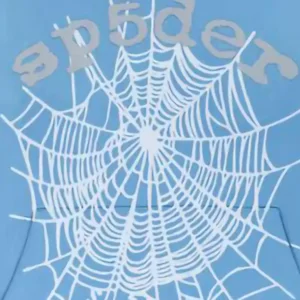

Sp5der rhinestones fall off and the puff web cracks for three main reasons: heat, friction, and glue that was weak from the factory. The stones sit on adhesive that softens in a dryer or under an iron, the raised puff print splits when it’s folded hard, and thin seams give out at stress points like the pocket. Handle the hoodie gently, keep it away from heat, and re-secure loose stones early with gem glue before they scatter across your floor.
Why Sp5der Rhinestones Come Loose
The web’s stones are held on with a heat-set or glue-based bond, not stitched, so the whole thing lives or dies by that adhesive. Heat is the number one killer: a tumble dryer, a hot iron, or even a hoodie left in a sunbaked car softens the glue enough that stones start letting go. Friction finishes the job — backpack straps dragging across the chest, a seatbelt over the web, or hard agitation in a washing machine knocks loose whatever the heat already weakened. If your Spider hoodie arrived with glue stains around the stones, take that as an early warning: it usually means excess or uneven adhesive, and those units shed faster. Stones near the edges of the web and in high-contact zones go first. The fix is mostly prevention — keep the web away from heat and cut down on anything rubbing across it.
Why the Puff Web Cracks and Peels
The raised part of the web is a puff print — a thick, 3D ink that gives Spider Worldwide its signature texture — and it behaves like any heavy print: it hates being bent and it hates heat. Cracks show up along fold lines first, so a hoodie crammed into a drawer with a sharp crease across the chest will split right there. Ironing directly over the web is the fastest way to ruin it, and a hot dryer slowly bakes and hardens the puff until it fractures. Cheaper or weaker units use thinner puff that cracks sooner, which is why the same care can leave one hoodie fine and another spidered with cracks. Once the puff splits, it rarely recovers cleanly — there’s no reliable way to melt it back together. Your best move is to never iron it and to store it without a hard fold running through the design.
Weak Seams and Ripping Pockets
The web gets all the attention, but the seams are often the first real failure. Thin, low-density stitching shows up most at high-stress points — and the kangaroo pocket is the worst offender. One owner had the pocket rip open on just the second wear, which tells you everything about how little margin some units have. Cuffs and the pocket corners take the most strain every time you shove your hands in, so those are the spots to baby. When you take the hoodie off, pull from the hem rather than yanking it over your head by the pocket, and avoid hooking the web on zippers or belt buckles. When a new one arrives, look at the seam density before you wear it hard; if the pocket corners look sparse, a few reinforcing stitches by hand or a tailor will save you a blowout later.
How to Handle and Store Your Sp5der Hoodie
Everyday handling does more damage than most people think. Don’t let the web grind against a backpack, a crossbody strap, or a car seatbelt for hours — that constant abrasion is what loosens stones and dulls the puff. Store it on a wide hanger so the shoulders keep their shape, or fold it flat with the web facing up and nothing stacked on top, so no weight presses into the print. Keep it out of hot cars and away from radiators, since ambient heat alone can soften the stone glue over time. If you wear Spider often, rotate between pieces instead of hammering one hoodie every day. Washing has its own rules that matter just as much — cold water, no dryer, and a gentle approach — and the full method lives in the dedicated Sp5der washing guide, so follow that rather than guessing.
Fixing Loose Stones and Cracked Spider Webs
Loose stones are fixable if you catch them early. A dab of a proper gem or fabric adhesive — something like Gem-Tac or E6000 — under the stone, pressed into place and left to cure fully, holds better than the factory bond in a lot of cases. Do it the moment one or two start lifting, because a wobbling stone drags its neighbors loose and a slow shed turns into a bald patch fast. If your order came with spare stones, hang onto them for exactly this. Cracked puff is the harder problem: there’s no clean repair once the ink has fractured, so the honest answer is prevention over cure. A light crack is mostly cosmetic and you can keep wearing it; a badly spidered web is a judgment call between wearing it as-is and retiring it. Either way, protecting the Spider web you have beats trying to rescue one that’s already gone.
FAQ
Does washing speed up Sp5der rhinestones falling off?
Yes — machine agitation and dryer heat are two of the fastest ways to lose stones. Hand-washing cold, turning the hoodie inside out, and air-drying dramatically slows the shed. The full step-by-step is in the Sp5der washing guide, which pairs directly with this durability advice.
Are rep Spider webs less durable than authentic ones?
Often, yes. Weaker batches use thinner puff and cheaper stone glue, which crack and shed sooner, and factory glue stains flag the worst units. A strong colorway from a good batch holds up far better, so QC the web closely before you commit to a rep.
Can I claim a refund if my Sp5der web cracks or stones fall off?
It depends where you bought it. Damage from heat, washing or wear usually isn’t covered, but a hoodie that arrives with a cracked web, missing stones or a ripped pocket is a defect worth raising immediately with the seller or agent, with photos, before you wear it.
How should I pack a Spider hoodie for travel without wrecking the web?
Roll it loosely with the web on the outside of the roll, or lay it flat on top of your bag so nothing presses a fold through the print. Avoid tight compression cubes and never let a hard-edged item sit against the puff.