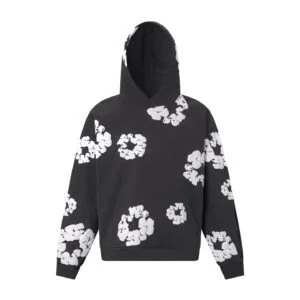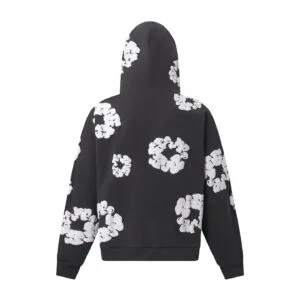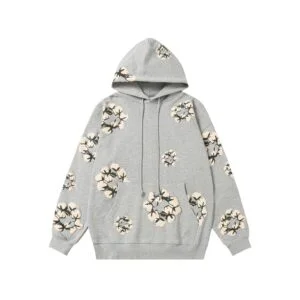

The Denim Tears cotton wreath is a ring of cotton bolls, and it points at the cotton economy that American slavery was built to serve. Tremaine Emory adapted the image after seeing a cotton wreath on the artist Kara Walker’s Instagram, and has described it as his talisman and his box logo. He founded the label in 2019, four hundred years after the date the brand keeps returning to. None of that is decoration attached to a graphic afterwards. It is the reason the graphic exists.
What 1619 Refers To
In late August 1619 an English privateer called the White Lion put in at Old Point Comfort, in the colony of Virginia, carrying roughly thirty captive Africans. They had been taken from a Spanish slave ship, the São João Bautista, and they came from the kingdom of Ndongo, in what is now Angola. At Point Comfort they were traded to colonists in exchange for supplies. A second small group arrived days later aboard a ship called the Treasurer.
They are the first Africans recorded in England’s mainland American colonies, and that is the specific claim historians make. It is worth being precise about the rest, because the date gets flattened a lot. Africans had been present in the Americas for a century before this under Spanish and Portuguese colonisation, sources differ on the exact day in August, and the legal status of those first arrivals in Virginia is still debated. What 1619 marks is a beginning in English North America, not the beginning of African slavery in the hemisphere.
The brand’s Tears of 1619 tee refers directly to this, and the four hundred year gap between 1619 and the label’s founding in 2019 is the frame the whole project sits inside.
Where the Wreath Came From
Emory has said he came across a cotton wreath on Kara Walker’s Instagram and adapted it. Walker is an American artist known for large scale silhouette cutouts that draw on slave narratives and antebellum southern imagery, cotton plants among them, to examine race, violence and representation. Her work is held by institutions including the Whitney.
One thing to be exact about, since it circulates wrongly: Walker did not design the Denim Tears logo and there is no collaboration between them. Emory saw an image in her feed and built something from it. The lineage is acknowledged rather than licensed.
What he built it into is deliberate. Calling the wreath his box logo places it inside streetwear’s own vocabulary, where a repeated mark on a garment is the engine of desire and resale. The move is to take that exact format, the thing people queue for, and load it with the history the format usually has nothing to do with. Emory has said that every time someone wears it, it opens another chance for conversation about where Black people, America and the world currently stand.
Why Cotton, Specifically
Cotton is not standing in for suffering in general. It is the material itself. The American cotton economy of the eighteenth and nineteenth centuries ran on enslaved labor, and that is the connection the wreath makes without needing a caption.
The label’s version of this is also personal rather than abstract. Emory made a documentary with his grandmothers in which they talk about the first time they picked cotton, which happened after slavery rather than during it, in the small town of Harlem, Georgia. That gap matters to the argument: sharecropping kept the same people doing the same work in the same fields long after abolition. He has made the same point through James Baldwin, whose family picked cotton first as enslaved people and then as sharecroppers.
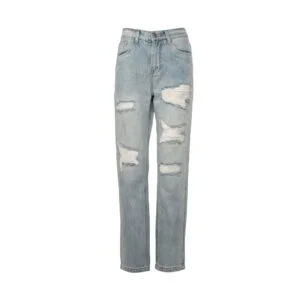
The material logic carried into the clothes as well. The first Levi’s capsule in January 2020 was built from vintage denim so that no new cotton went into the trucker jacket or the 501s. Putting a cotton wreath on a garment that consumed no new cotton is the sort of detail that tells you the subject was settled before the product was.
The Rest of the Vocabulary
The wreath is the best known mark but it is one entry in a consistent set. Another Country borrows its title from Baldwin’s 1962 novel. The Diaspora Flags tee carries embroidered flags of the diaspora, from Brazil and Cuba to Ethiopia, Haiti, Nigeria, Senegal, Sierra Leone and Trinidad and Tobago, alongside the Pan African flag and the Union Black flag.
The collaborations run on the same grammar. The 2020 Converse Chuck 70 carried the Pan African flag and gave its proceeds to voter organizations. The UGG project was about Emory’s Black Seminole heritage. Champion Tears drew on Alvin Ailey. The fourth Levi’s season honored New Orleans and the Black Masking Indian tradition. Dior Tears was about African American jazz musicians in Paris, and figures like Baldwin and Miles Davis being celebrated in Europe while segregation continued at home. Our ranked guide to every Denim Tears collaboration goes through them individually.
A Label That Behaves Like a Research Project
Two things show how seriously the brand takes its own premise. The Levi’s collection was included in The Met’s 2021 exhibition In America: A Lexicon of Fashion, which is not where cotton wreath tees would have ended up if the subject were a marketing angle.
And the New York flagship, African Diaspora Goods on Spring Street, was designed with the artist Theaster Gates and holds a public research library of well over a thousand publications on African art and culture. A shop that is also a reading room is an unusual choice for a streetwear label, and it reads as consistent with everything above. The current Fall/Winter 2026 collection continues in the same direction, carrying licensed NAACP graphics alongside its collaboration with the André Leon Talley Estate.
What This Means If You Are Buying One
You do not need a history lesson to wear a hoodie, and the brand has never asked anyone to earn the print. But knowing what the wreath is does two practical things.
It explains the price. The same garment costs roughly 40 to 75 percent more with the wreath than without it across comparable categories, and what you are paying for is the mark rather than the cotton, which we break down separately. And it explains why this specific print is the most counterfeited part of the brand, and why buying a fake one is a slightly different proposition here than with a graphic that means nothing. If you are buying secondhand, our guide to telling a real Denim Tears piece from a fake covers what to check.
FAQ
What does the Denim Tears cotton wreath mean?
It is a ring of cotton bolls referring to the cotton economy that American slavery served, and to the sharecropping that followed abolition. Tremaine Emory adapted the image after seeing one on Kara Walker’s Instagram and has called it his talisman and his box logo, deliberately using streetwear’s own logo format to carry that history.
Did Kara Walker design the Denim Tears logo?
No. Emory has credited seeing a cotton wreath on her Instagram as the starting point, and Walker’s work with antebellum imagery is the lineage he is drawing on, but she did not design the mark and there is no collaboration between them. It is an acknowledged influence rather than a licensed artwork.
What does Tears of 1619 refer to?
The arrival in late August 1619 of roughly thirty captive Africans at Old Point Comfort in Virginia aboard the English privateer White Lion, the first Africans recorded in England’s mainland American colonies. Denim Tears was founded in 2019, four hundred years later, and the brand name itself carries the reference.
Why is the wreath usually on denim?
Because denim is cotton, and American workwear denim is the most familiar product of the cotton economy the wreath points at. Putting the mark on a Levi’s 501 places it on the garment that carries that history most directly, which is why the Levi’s partnership rather than a standalone tee is where the idea first landed.